
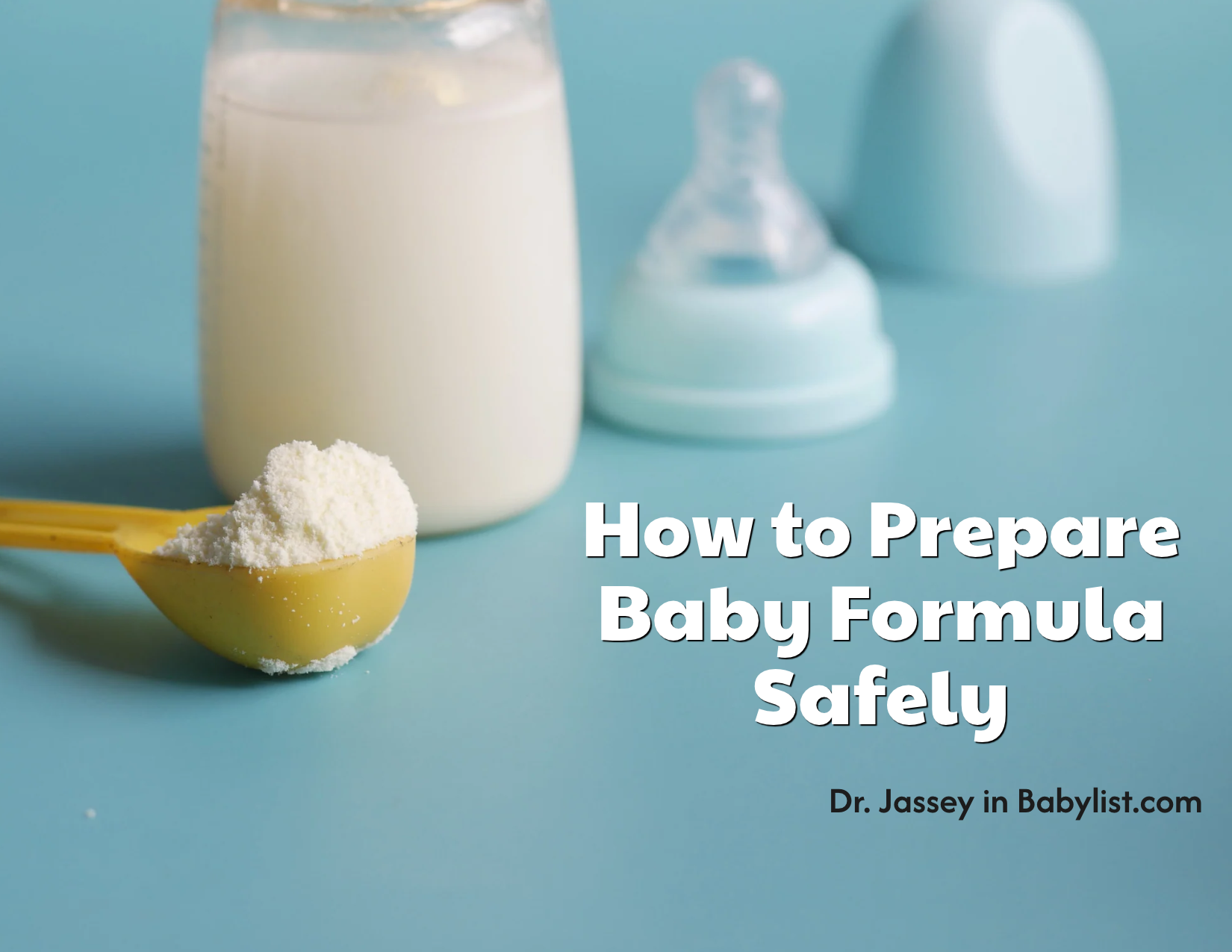
From a single bottle to a full pitcher, here’s how to get the measurements, mixing and storage right.
By Briana Engelbrecht
Fact Checked by Shannon Vestal Robson
Nov 11, 2026
Read the full article at Babylist.com
If your baby drinks powdered formula, one of the first things you’ll learn is how to prepare a bottle. The instructions are right on the container, but you have a few options for mixing: directly in a bottle, in a pitcher for batch prep or with an automatic formula machine. Whichever method you choose, the starting point is the same: use the exact amounts of water and powder listed for your specific formula.
I talked to Lauren Hughes, MD, a pediatrician and certified lactation counselor, and Jonathan Jassey, DO, FAAP, of Concierge Pediatrics, about why ratios matter, what kind of water to use and how to safely use those formula prep tools.
Here’s what to know before you scoop.
Why The Formula-To-Water Ratio Matters
Baby formulas are heavily regulated and designed to provide your baby with a specific balance of nutrients, calories and water. And that depends on getting the ratio exactly right—changing the measurements changes that balance.
“If you use too much water, you’re at risk for diluting the nutrition your baby needs,” says Dr. Jassey. On the other hand, too much powder means baby’s bottle will be overly concentrated and that can cause dehydration or put stress on your baby’s kidneys.
Dr. Hughes explains that the ratio also helps maintain electrolyte balance—specifically minerals such as sodium and potassium that help the body function. Getting the measurements right matters for both hydration and nutrition.
What’s important for parents to note: mixing instructions can differ between formulas. Be sure to follow your formula’s instructions every time, and double-check if you ever have to switch to a different formula. Unless your baby’s healthcare provider has prescribed a different concentration, you should never add extra powder to make a bottle more filling or extra water to stretch a container.
How To Prepare Powdered Baby Formula
Preparing formula involves a few steps that will become familiar with practice. The basics—clean equipment, accurate measurements and safe storage—apply when you’re preparing one bottle or using formula prep tools, too.
Before you start, check the formula’s use-by date and instructions for storage after opening. Read the mixing directions to confirm exactly how much water and powder you’ll need for the amount you’re preparing.
- Start with clean hands and supplies. Wash your hands and clean your preparation surface. Use clean bottles, parts and mixing equipment, plus a clean, dry scoop. Dr. Hughes also emphasizes thoroughly cleaning and properly drying formula-preparation equipment. Follow your tool’s cleaning and maintenance instructions.
- Prepare and measure the water. Follow your formula’s directions and the water-temperature guidance below. When mixing by hand, measure the exact amount of water into your bottle or pitcher before adding powder. If you’re using a water-only dispenser, check the amount dispensed before adding formula. For an automatic formula machine, fill the water reservoir according to its instructions and select the amount you want to prepare. Confirm that any device you use can meet the preparation-temperature recommendations for your baby.
- Add the correct amount of powder. For a bottle or pitcher, use the scoop supplied with your formula and measure as directed. For a larger batch, follow the formula manufacturer’s batch-preparation instructions. An automatic machine handles the powder measurement for you, so confirm that your exact formula is compatible and select the correct settings for your machine model, formula brand and formula type. Check those settings again whenever you change formulas.
- Mix thoroughly. For a bottle, attach the parts and mix as the formula label directs. For a pitcher, use its mixing mechanism according to the manufacturer’s instructions. An automatic formula machine handles the mixing. Whichever method you use, follow the instructions for both the formula and the equipment.
- Feed or refrigerate promptly. If you’re preparing formula ahead, cover and refrigerate it immediately, either in a mixing pitcher or portioned into clean bottles. Label it with the preparation date and time and use it within 24 hours. Follow the feeding and storage time limits below.
A pitcher can be especially helpful if you’re preparing several bottles a day. “They can be a great time saver when used appropriately,” says Dr. Jassey.
Dr. Hughes recommends preparing an amount your baby will actually drink within the storage window. A larger batch isn’t always more convenient if you end up throwing much of it away. And pouring refrigerated formula into individual bottles later doesn’t restart the 24-hour clock.
Also, walk through your bottle-prep routine with anyone who’ll be feeding your baby. Make sure they know the measurements for your specific formula and any special preparation instructions from your baby’s healthcare provider.
“Water first, always, then powder on top”
Why does the water go in first?
The most important thing to keep in mind: “Water first, always, then powder on top,” says Dr. Hughes.
Not to get too high school science class, but if you add powder to the bottle first, it takes up space—essentially displacing the water and giving you an inaccurate measurement. If you scoop first and then fill the bottle to the water measurement, you’ll end up with less water than the instructions call for.
The flip side can be confusing, too: after you add powder to correctly measured water, the finished bottle will contain more volume than the water you started with. Hughes says that increase is expected. You don’t need to adjust the mixture to bring it back down to the original water line.
And if you’ve heard you should only swirl a bottle? Follow your formula’s mixing instructions, but you don’t need to avoid shaking. As Dr. Hughes puts it: “You don’t have to swirl it. Shaking it is fine.”
Check the label when you switch formulas
It’s not uncommon to have to switch formula brands or a different option from the same brand, or try something new if your baby’s tummy doesn’t seem to agree. Dr. Jassey says the most important thing to know about prepping that new formula if you switch is that not all brands are the same when it comes to their mixing instructions.
A new formula might come with a different scoop or different water-to-powder instructions. That doesn’t mean one brand is wrong—you just need to follow the directions for the product you’re using.
Dr. Hughes also recommends sharing any changes with everyone who prepares your baby’s bottles. A partner, grandparent or childcare provider may have the old measurements memorized, so it’s worth walking through the new label together.
There’s more to this article!
Read the full article at Babylist.com for more, including:
- What water and temperature should you use to mix formula?
- How long is prepared formula good for?
- What happens if I mix the bottle incorrectly?
- Frequently Asked Questions About Baby Formula Preparation